Playing Through the Pain: How Indie Games Are Rewriting the Rules of Mental Health Storytelling
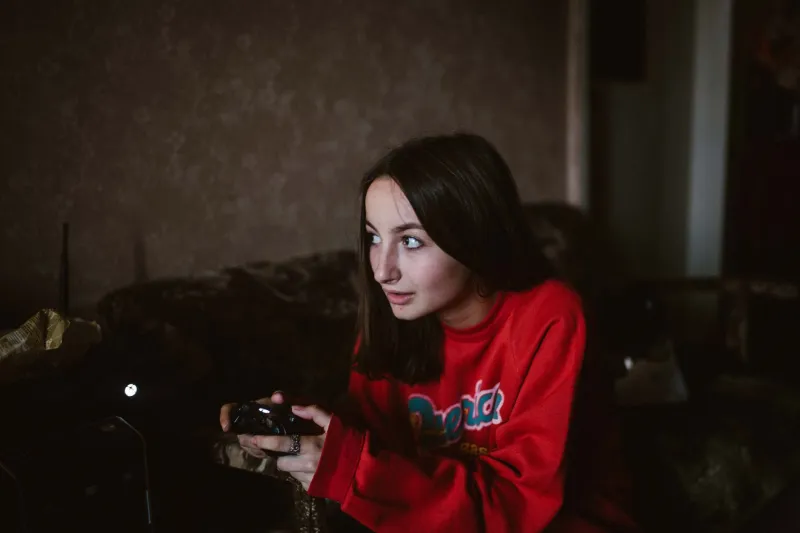
There's a moment in Celeste — you probably know the one — where Madeline's panic attack doesn't just happen in a cutscene. It happens to you. Your thumbs tense up. The controls resist. The screen gets noisy. For a few brutal seconds, you don't watch a character struggle with anxiety. You are the character struggling with anxiety.
That's the thing about indie games and mental health storytelling right now. The best ones aren't pulling from the after-school special playbook. They're not dropping in a sad piano melody and calling it emotional depth. They're building the experience of mental health directly into the fabric of how you interact with the world.
And it's quietly becoming one of the most exciting things happening in games.
Mechanics as Metaphor
Let's talk about what makes this approach different from, say, a big-budget title slapping a therapy session into act two of its open-world adventure.
In Hellblade: Senua's Sacrifice — technically a mid-size production, but spiritually indie in its ambitions — psychosis is rendered through binaural audio that whispers contradictions into your ears. You can't turn it off. You can't mute the voices telling you you're going to fail. The discomfort is the point. The game doesn't explain psychosis to you; it makes you inhabit a version of it.
Smaller studios have been running with this idea in fascinating directions. Spiritfarer, developed by Thunder Lotus Games, frames grief as a management sim. You're literally ferrying souls to the afterlife, maintaining their favorite foods and comfort rituals until they're ready to go. The mundane caregiving tasks — cooking, building, tending — become a language for the exhausting, loving labor of watching someone you care about decline. Players have reported ugly-crying while crafting soup. That's not an accident.
Then there's A Short Hike, which handles anxiety and the need to escape with almost offensive simplicity. You just... walk. And climb. And the island gets bigger the more you explore. There's no villain. No ticking clock. The game's entire emotional argument is that sometimes the most radical thing you can do for your mental health is give yourself unstructured time to wander.
Why Small Studios Get to Go There
Here's a question worth sitting with: why are indie developers so much better at this than AAA studios with hundred-million-dollar budgets?
Part of it is creative control. When a single developer or a team of five is making a game, there's no publisher meeting where someone says, "But will this test well in the Midwest?" The vision stays intact. The uncomfortable edges don't get sanded down.
Part of it is also personal stakes. A lot of these games exist because the person making them needed to make them. Night in the Woods came from Alec Holowka and Scott Benson processing feelings about small-town stagnation, mental illness, and the terror of adulthood. Gris was Nomada Studio's attempt to visualize depression through color and movement. Before Your Eyes uses your actual blinks — tracked by your webcam — as the mechanic for moving through a life and losing it. These aren't games designed by committee. They're games designed by people who had something specific and urgent to say.
There's also a financial reality at play. Big studios are accountable to shareholders, and shareholders want predictable returns. Experimental emotional experiences are risky. Indie developers, operating on smaller margins with more creative freedom, can afford to make a game that resonates deeply with 200,000 people rather than superficially with 2 million.
The Player as Participant, Not Spectator
What keeps coming up when you dig into this space is the idea of agency. Games — unlike film or books — require you to do something. And that doing can be deeply meaningful when it's designed thoughtfully.
Take Sea of Solitude, a game from Jo-Mei Games. You navigate a flooded city as Kay, a young woman whose inner darkness has literally turned her into a monster. To progress, you have to confront manifestations of her trauma — including a version of her abusive ex-boyfriend rendered as a towering, threatening creature. You don't just watch Kay face her fears. You steer her toward them. The controller in your hands makes you complicit in her healing.
Or consider Disco Elysium, which turns your own character's psychology into a cast of internal voices arguing over every decision. Your stats aren't just numbers — they're competing parts of a fractured personality. The game asks you to live inside a man falling apart and somehow find a way to keep going. It's one of the most honest portrayals of addiction, failure, and rebuilding self-worth that any medium has produced.
The Conversation Happening Right Now
Mental health awareness in the US has shifted dramatically over the past decade. Therapy is less stigmatized. Gen Z talks about anxiety and depression with a frankness that would have been unthinkable for previous generations. And games — particularly indie games — are meeting that cultural moment.
Organizations like Take This (takethis.org) have been working with game developers to promote mental health awareness in gaming culture, and the conversations they're facilitating are increasingly sophisticated. It's not just "does your game have a crisis hotline number in the credits" anymore. It's "does your game understand what it's depicting?"
The best indie developers clearly do. They're doing research. They're consulting with mental health professionals. They're sharing their own lived experiences as source material. And the results are games that feel less like entertainment products and more like — and this might sound dramatic, but stay with us — genuine acts of empathy.
Not Perfect, But Pointing Somewhere Important
None of this is to say indie games always get it right. There's a real risk of trauma aesthetics — using mental illness as visual flavor without genuine understanding. A game that makes depression look pretty without capturing how it actually feels isn't doing the work. It's just borrowing the vocabulary.
But the studios doing this thoughtfully? They're creating something genuinely new. They're using the unique properties of interactive media — agency, embodiment, real-time consequence — to build understanding from the inside out.
And in a media landscape where mental health conversations are more necessary than ever, that matters. A lot.
So next time a small, weird-looking game shows up on your Steam queue with a description that sounds a little too emotionally heavy for a Tuesday night — maybe give it a shot. You might not expect to feel seen by a pixel-art platformer or a text-heavy RPG. But that's kind of the whole point. The best daydreams are always the ones that catch you off guard.